Equatorial Guinea Affected Country 3D: A Visual Tool for Pandemic Communication
Understanding the Purpose of Equatorial Guinea Affected Country 3D
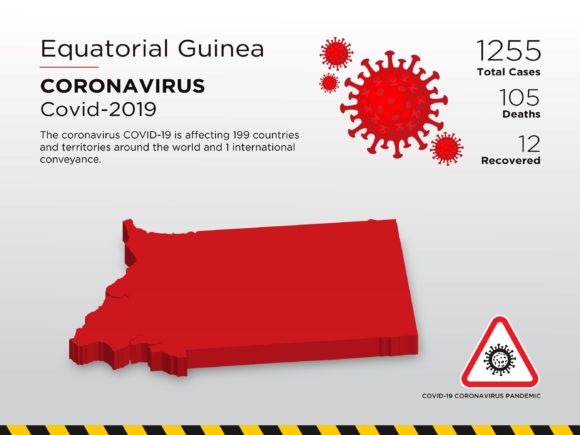
The Equatorial Guinea Affected Country 3D is a specialized infographic design template tailored for visualizing the impact of the coronavirus pandemic within Equatorial Guinea. It combines geographic representation with 3D modeling to clearly display key data points such as total cases, deaths, and recoveries. This design concept is especially useful for those who need to communicate health data in a visually engaging and easily digestible format.
Whether you're a public health official, a digital marketer, or a content creator, this template offers a powerful way to present complex data. It's built to be adaptable across various platforms, including social media, websites, and printed materials, making it ideal for both local and global audiences seeking accurate, up-to-date information about the pandemic's impact in Equatorial Guinea.
When and Where to Use This Infographic Design
One of the most common applications for the Equatorial Guinea Affected Country 3D is in public health communication. Local authorities and international organizations can use it to provide real-time updates on the state of the pandemic in the region. The visual clarity of the 3D map helps viewers quickly grasp the severity and spread of the virus, which is especially important during surges or new outbreaks.
For digital marketers and social media managers, this template is perfect for crafting timely, data-backed posts that resonate with audiences concerned about health and safety. It can be used to create banners for websites, Facebook updates, Twitter infographics, or Instagram stories that highlight the current status of the pandemic in Equatorial Guinea. This kind of visual storytelling not only informs but also builds trust with your audience by showing your commitment to accuracy and transparency.
Who Benefits from This Design and How
Various professionals and organizations can benefit from using the Equatorial Guinea Affected Country 3D infographic. Educators and students can use it in online courses or presentations to illustrate the real-world impact of the pandemic. Bloggers and journalists covering health-related topics can enhance their articles with visual data, making their content more engaging and shareable.
- Public health departments: Can use it to report regional statistics in a clear, visual format.
- NGOs and humanitarian organizations: May incorporate the design into awareness campaigns or informational materials.
- Content creators: Can integrate the template into YouTube thumbnails, blog headers, or explainer videos.
- Businesses: Especially those in healthcare, travel, or education, can use it to inform employees or customers about local conditions.
Even everyday users who want to share reliable, localized data with their personal networks can find value in this design. Whether you're updating friends on the situation in Equatorial Guinea or creating content for a broader audience, this infographic offers a ready-made solution that’s both professional and easy to customize.
How to Make the Most of This Design Template
To get the best results from the Equatorial Guinea Affected Country 3D, users should consider how they plan to apply the design. For example, if you're using it for a social media post, you may want to simplify the data to highlight just the most relevant numbers. If you're using it for a report or presentation, adding additional layers of context—such as dates, comparisons to other regions, or prevention tips—can make the design more informative.
The template includes both EPS and JPEG file formats, giving users flexibility in how they edit and share the design. JPEG files are great for quick sharing on platforms like Instagram or Twitter, while EPS files allow for more detailed customization in vector editing software. This versatility ensures that whether you're a beginner or a seasoned designer, you can adapt the template to fit your needs without losing quality.
What to Consider Before Using This Template
Before downloading or using the Equatorial Guinea Affected Country 3D, it's important to understand the context in which you'll be sharing the data. Always ensure that the statistics you include are up to date and sourced from reliable institutions like the World Health Organization or national health departments. Misleading or outdated data can damage your credibility, even if the design itself is strong.
Also, consider the audience you're targeting. If you're speaking to a general audience, keep the design clean and avoid unnecessary technical jargon. If you're presenting to professionals or researchers, you may want to include more detailed data overlays or annotations. The beauty of this template is its adaptability—you can tailor it to suit both casual and formal contexts.
Real-World Scenarios Where This Design Makes a Difference
Imagine a small NGO in Malabo working to educate communities about the spread of the virus. They could use the Equatorial Guinea Affected Country 3D to create posters that show how different provinces are being affected. By displaying this in local clinics, schools, or community centers, they help people understand the situation in a way that words alone can't achieve.
Similarly, a university professor teaching a course on global health could integrate the design into a lecture slide deck. By visually showing the progression of cases over time, students gain a more intuitive understanding of how the pandemic unfolded in Equatorial Guinea compared to other countries.
Even a freelance designer working on a client's website might use this template to create a dedicated section for pandemic updates. It provides a professional look and can be easily updated as new data becomes available, ensuring the site remains relevant and useful to visitors.
Final Thoughts on Using Equatorial Guinea Affected Country 3D
The Equatorial Guinea Affected Country 3D is more than just an infographic—it's a communication tool that brings clarity to complex data. Whether you're informing the public, supporting education, or enhancing your content strategy, this design offers a practical, visually appealing way to convey important health information. Its flexibility, ease of use, and relevance make it a valuable asset for anyone looking to make a meaningful impact through visual storytelling.