Visualizing Care: The Strategic Role of the Medical Treatment Icon in Modern Design
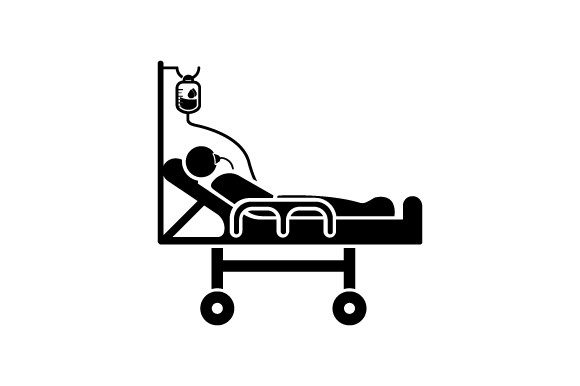
In the complex landscape of healthcare communication, clarity is not merely an aesthetic preference; it is a functional necessity. Patients, professionals, and stakeholders navigate high-stress environments where cognitive load is already elevated. Within this context, visual shorthand becomes a critical tool for reducing friction and enhancing comprehension. The Medical Treatment Icon serves as one of the most potent symbols in this visual vocabulary, bridging the gap between clinical precision and human empathy. When paired with complementary graphics, such as a simple illustration of a startup icon, these assets form the backbone of effective health-tech branding, patient education materials, and digital interface design.
Semiotics and Psychological Impact in Healthcare Graphics
Understanding why specific medical symbols resonate requires looking beyond their shape to their psychological function. A well-designed treatment icon does more than indicate "medicine" or "therapy"; it signals safety, competence, and resolution. In user experience (UX) research within digital health platforms, familiar iconography has been shown to decrease navigation time and reduce user anxiety. When a patient sees a standardized representation of treatment, the brain processes the information faster than text, allowing for quicker decision-making in emergency interfaces or smoother browsing in telehealth applications.
The intersection of medical imagery and business symbolism creates a unique narrative space. As the healthcare sector increasingly merges with technology and entrepreneurship, designers often need to juxtapose clinical care with innovation. Utilizing a Simple Illustration of Startup Icon alongside traditional medical symbols communicates a dual message: the reliability of established medicine and the agility of modern solutions. This combination is particularly relevant for venture capital pitch decks, incubator presentations, and marketing materials for biotech firms where the audience must understand both the clinical value proposition and the business viability simultaneously.
Balancing Abstraction with Recognition
One of the primary challenges in utilizing medical icons is finding the equilibrium between stylistic abstraction and immediate recognition. Overly detailed illustrations can become muddy at small sizes, while overly abstract shapes may lose their semantic meaning. Professional vector assets address this by employing clean lines and optimized geometry. Whether depicting a syringe, a bandage, a pill, or a therapeutic hand, the design must remain legible across various mediums, from a 16-pixel favicon on a browser tab to a large-format banner in a hospital corridor. This scalability ensures that the visual identity remains consistent regardless of the touchpoint.
Technical Versatility Through Multi-Format Asset Delivery
For designers and project managers, the utility of a graphic asset is defined by its flexibility. A single static image rarely suffices for comprehensive projects that span print, web, and video. The inclusion of multiple file formats—SVG, EPS, AI, and PNG—transforms a simple icon into a versatile system component capable of adapting to diverse technical requirements.
- SVG (Scalable Vector Graphics): This format is indispensable for modern web development. SVGs are XML-based, meaning they are searchable, indexable, and scriptable. For SEO purposes, embedding SVG code directly into HTML allows search engines to read the graphic's metadata, contributing to better accessibility and discoverability. Furthermore, SVGs scale infinitely without pixelation, making them perfect for responsive designs that must look crisp on retina displays and mobile devices alike.
- EPS (Encapsulated PostScript): While older than SVG, EPS remains the industry standard for professional printing and cross-platform vector exchange. When designing physical collateral such as brochures, signage, or packaging for medical products, EPS files ensure compatibility with various RIP (Raster Image Processor) systems used by commercial printers. This format preserves vector data in a way that guarantees color accuracy and edge sharpness in high-volume production runs.
- AI (Adobe Illustrator): The source file is the foundation of customization. No two brands have identical color palettes or stylistic guidelines. Access to the native AI file allows designers to modify stroke weights, adjust anchor points, recolor elements using global swatches, and integrate the icon seamlessly into larger composite illustrations. This editability is crucial when adapting generic medical symbols to match specific corporate identities or regulatory compliance standards.
- PNG (Portable Network Graphics): Despite the dominance of vectors, raster formats retain significant utility. PNGs with transparent backgrounds are essential for quick mockups, presentation slides, email signatures, and legacy software integration where vector support is absent. They provide a reliable fallback option and facilitate rapid prototyping without requiring specialized vector editing software.
Color Theory and Customization in Medical Contexts
Color plays a pivotal role in how medical icons are perceived. While blue and green are traditional choices representing trust and healing, contemporary health-tech startups often employ vibrant gradients or unexpected hues to differentiate themselves in a crowded market. Because the included files are fully editable vectors, designers can experiment with color psychology without degrading quality. Adjusting the hue of a Medical Treatment Icon can shift its connotation from clinical sterility to warm, patient-centered care, or from general practice to specialized pediatric services. This level of control ensures that the visual assets align perfectly with the emotional tone of the project.
Practical Applications Across Diverse Sectors
The utility of these graphic assets extends far beyond hospital websites. Their application spans multiple industries and user personas, each with distinct needs and constraints.
Digital Health and Telemedicine Platforms
In app development and web design, icons serve as navigational anchors. A telemedicine platform might use a treatment icon to designate appointment booking, medication management, or symptom tracking features. Consistency in icon style reduces cognitive friction, helping elderly patients or those with limited digital literacy navigate complex interfaces independently. The lightweight nature of SVG assets also contributes to faster page load times, a critical factor for user retention and SEO performance in competitive digital health markets.
Educational Materials and Public Health Campaigns
Educators and public health officials rely on clear visuals to convey complex information to broad audiences. Infographics explaining vaccination schedules, hygiene protocols, or chronic disease management benefit immensely from professional-grade icons. Unlike clip art, which often carries unprofessional connotations, polished vector illustrations maintain authority while remaining accessible. When combined with startup-style graphics, these materials can also illustrate the ecosystem of care, showing how new technologies and community initiatives support traditional medical treatments.
Business Development and Investor Relations
For entrepreneurs in the medtech space, visual communication is as important as financial modeling. Pitch decks and business plans require graphics that articulate value propositions quickly. A Simple Illustration of Startup Icon integrated with medical symbolism can visually represent concepts like "disruptive therapy," "scalable care delivery," or "innovative diagnostics." These visuals help investors grasp the intersection of healthcare impact and business growth potential more intuitively than text-heavy slides. Having editable source files allows founders to tailor these visuals for different investor audiences, emphasizing clinical efficacy for medical advisors or market scalability for venture capitalists.
Implementation Best Practices and Accessibility Considerations
Owning high-quality assets is only the first step; implementing them effectively requires adherence to best practices. Accessibility should be paramount in any medical design project. When using SVGs on the web, always include descriptive titles and ARIA labels to ensure screen readers can interpret the icon's function for visually impaired users. An icon labeled generically as "image" fails to communicate its purpose; proper tagging transforms it into a meaningful navigational element.
Consistency in stroke width and corner radius across all icons in a set maintains visual harmony. Mixing disparate styles can create a disjointed user experience that undermines professional credibility. Using the provided AI files, designers can normalize new additions to match existing brand assets, ensuring a cohesive visual language throughout the project lifecycle.
Furthermore, cultural sensitivity must inform icon selection and modification. Medical symbols carry different meanings across cultures; what represents healing in one context may be ambiguous or offensive in another. The ability to customize vector assets allows designers to adapt imagery for global audiences, ensuring that the Medical Treatment Icon communicates universally positive associations regardless of geographic deployment.
Future-Proofing Visual Assets
The healthcare landscape evolves rapidly, and visual assets must evolve with it. New treatments emerge, regulations change, and design trends shift. Vector-based assets offer inherent future-proofing because they are resolution-independent and easily modifiable. Unlike raster images that must be recreated from scratch when requirements change, AI and EPS files can be updated indefinitely. This longevity makes comprehensive icon packages a sustainable investment for organizations planning long-term campaigns or product lifecycles.
Ultimately, the value of these graphic resources lies in their capacity to translate complex medical and business concepts into universally understood visual language. By providing multiple formats and editable sources, they empower creators to build communications that are not only aesthetically pleasing but also functionally superior, accessible, and strategically aligned with organizational goals. Whether enhancing patient understanding, securing investment, or streamlining digital navigation, professional medical and startup icons serve as foundational elements in the architecture of modern healthcare communication.